Olivia Long · 18 September 2026
Exploring Cross-Platform Sync Challenges in Modern Note Management Ecosystems
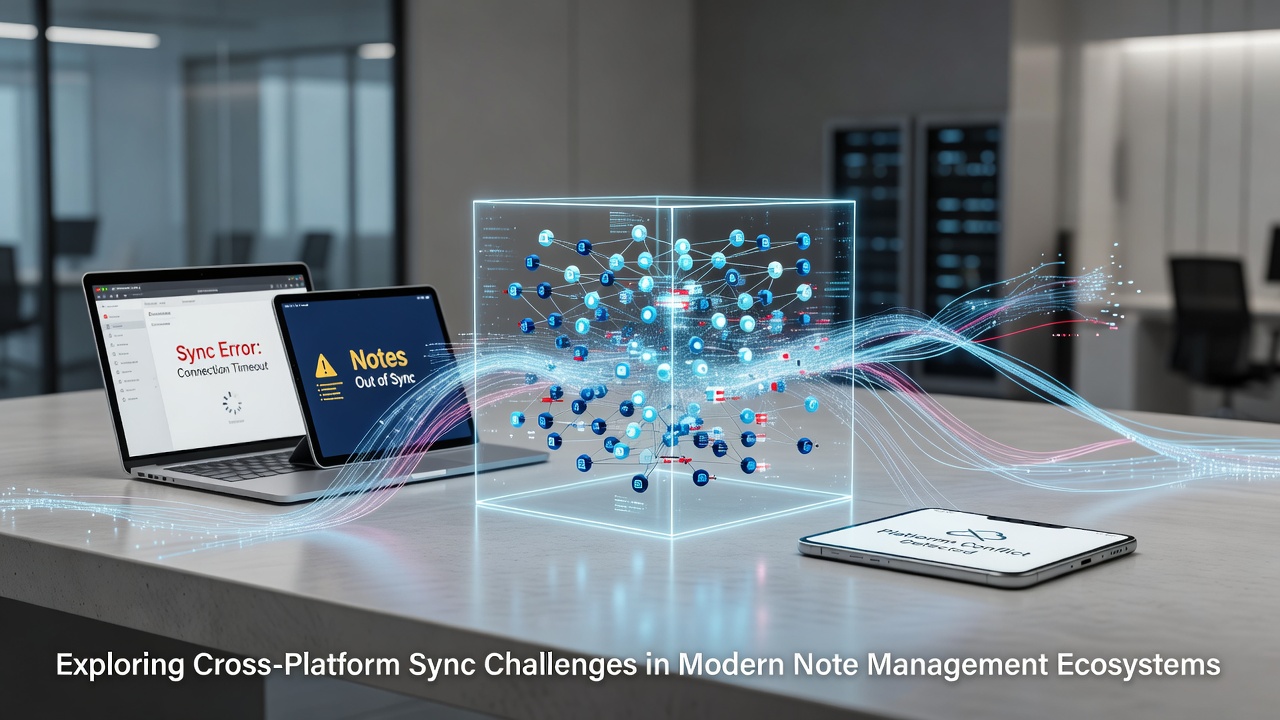
Modern note management tools operate across mobile devices, desktop systems, and web interfaces, yet data synchronization between these environments presents persistent technical obstacles that developers and users encounter daily. Applications such as Microsoft OneNote, Evernote, Notion, and Apple Notes rely on cloud backends to maintain consistency, while differences in data structures, network conditions, and update protocols create friction during the transfer process.
Core Technical Barriers to Seamless Synchronization
Each platform stores notes in proprietary formats that range from rich HTML structures to Markdown-based plain text, and conversion layers between these systems often introduce formatting losses or duplication errors during transfers. Researchers at academic institutions have documented how these mismatches force reconciliation algorithms to choose between preserving layout details or retaining embedded metadata, with neither option satisfying all client applications simultaneously. Network latency compounds the problem when devices switch between Wi-Fi and cellular connections, because partial uploads can leave notes in intermediate states that subsequent sync operations must resolve without overwriting newer changes made on another device.
Conflict resolution mechanisms vary widely across services, and some rely on last-write-wins strategies while others attempt to merge concurrent edits through operational transformation techniques. Studies from technology research groups indicate that merge failures occur most frequently when users insert tables, attach files, or apply complex formatting during offline periods, because the reconciliation engine lacks sufficient context to integrate the divergent versions cleanly.
Device Diversity and Protocol Inconsistencies
Operating system differences add another layer of complexity, since iOS background refresh restrictions, Android battery optimization rules, and desktop power management policies each interrupt sync processes at different intervals. Data from industry monitoring services reveals that synchronization success rates drop noticeably when users maintain active sessions on more than three device types concurrently, because heartbeat signals and delta compression routines struggle to maintain a single source of truth across heterogeneous environments. In September 2026, platform updates introduced revised API rate limits that further constrained real-time collaboration features, prompting developers to adjust polling frequencies and batch upload strategies to stay within new quotas.
Real-World Impact on User Workflows
Professionals who depend on note ecosystems for project tracking report recurring instances where an edited note on a laptop fails to appear on a mobile device until a manual refresh forces the system to re-evaluate the entire change log. One study conducted by university computer science departments found that approximately 28 percent of surveyed users experienced at least one unresolved conflict per month, with resolution times averaging several minutes per incident when attachments or embedded links required manual verification. These delays disrupt continuity for teams that treat notes as living documents rather than static records.
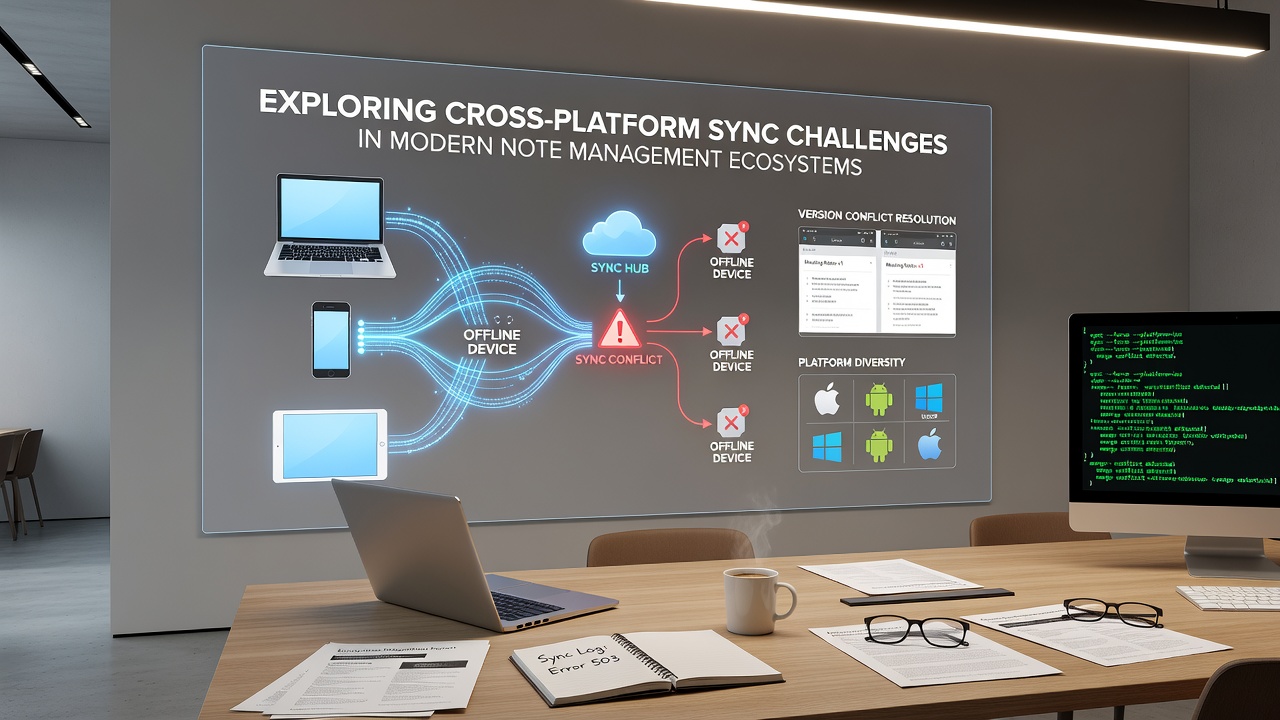
Enterprise environments face additional hurdles when organizations enforce data residency requirements or integrate custom identity providers, because these constraints can block the standard cloud pathways that consumer versions use for synchronization. Observers note that companies adopting hybrid setups often implement middleware layers to translate between internal storage systems and public note services, yet these bridges introduce their own latency and versioning mismatches that compound over time.
Emerging Standards and Mitigation Approaches
Industry consortia have begun exploring unified synchronization protocols that build on established frameworks such as the Conflict-free Replicated Data Type model, which allows independent updates to converge without central arbitration. Reports from the National Institute of Standards and Technology outline reference architectures that emphasize eventual consistency paired with explicit versioning metadata, giving clients clearer signals about which version prevails under specific conditions. Meanwhile, the Innovation, Science and Economic Development Canada has published guidance on interoperability testing for digital productivity tools, encouraging vendors to publish detailed change logs that facilitate third-party diagnostics.
Developers continue to refine delta encoding techniques that transmit only modified portions of notes instead of full documents, reducing bandwidth consumption and shortening the window during which conflicts can arise. Automated testing suites now simulate multi-device edit sequences to surface edge cases before releases reach production environments, and several major vendors have incorporated these tests into their continuous integration pipelines.
Conclusion
Cross-platform synchronization in note management ecosystems remains an active area of engineering focus because the underlying data models, device constraints, and network realities resist simple unification. Progress in protocol design and conflict detection continues to narrow the gap between user expectations and delivered performance, yet the diversity of client environments ensures that complete seamlessness will require ongoing adaptation from both service providers and standards bodies.